SEO in 2026: Why the Old Rules Are Dead and What Actually Ranks Now
The SEO playbook that worked in 2022 is actively working against you in 2026. The algorithm is not the same. The search results page is not the same. And the businesses winning organic search right now are playing a completely different game.
Published: June 2026 | Category: SEO | Reading Time: 8 min
You have been told to "just write good content" for years. You have published blogs, sprinkled in keywords, picked up a few backlinks. And your Google rankings are still a flat line.
Here is the uncomfortable truth. The SEO playbook that worked in 2022 is actively working against you in 2026. The algorithm is not the same. The search results page is not the same. And the businesses winning organic search right now are playing a completely different game.
What Changed and Why Most Businesses Are Still Playing Catch-Up
The last two years have been the most disruptive in search engine history. Google's rollout of AI Overviews changed how millions of searches get resolved, with answers appearing at the top of the page before a single link is clicked. For many queries, users get what they need without ever visiting a website.
Add to that: zero-click searches now account for over 58% of all Google searches. Entity-based ranking has replaced pure keyword matching as a core signal. E-E-A-T (Experience, Expertise, Authoritativeness, Trustworthiness) is no longer just a quality guide, it is a real ranking factor. And Google's systems have gotten better at identifying generic, templated content and pushing it down.
Businesses still publishing keyword-stuffed 800-word blog posts are fighting the last war. Meanwhile, their competitors are showing up inside AI Overviews, ranking for clusters of intent-matched queries, and building topical authority that compounds month after month.
The 4 SEO Pillars That Actually Drive Rankings in 2026
Topical Authority Over Individual Keywords
Google no longer ranks pages in isolation. It ranks websites that have demonstrated deep, consistent expertise on a subject.
If you sell accounting software, writing one post about "small business taxes" will not move the needle. But building a comprehensive content cluster covering bookkeeping basics, payroll compliance, cash flow management, tax deadlines, and audit preparation tells Google that you own this topic. That is what drives sustained rankings.
The shift is this: stop chasing individual keywords. Start mapping your entire subject matter expertise into interconnected content, and then build it out systematically.
Optimizing for AI Overviews and Featured Snippets
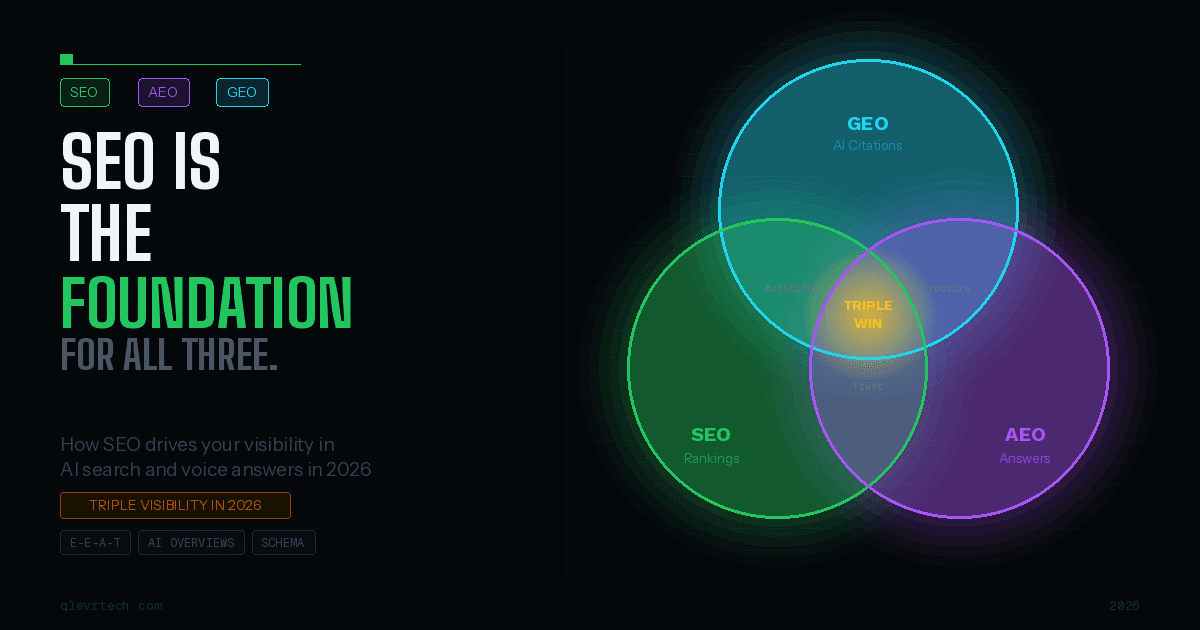
With AI Overviews dominating the top of search results, the goal is not just ranking on page one anymore. It is getting cited inside the AI answer.
Google's AI pulls from pages that answer questions clearly and directly within the first 100 words. It favors structured formats like numbered lists, definition blocks, and comparison tables. And it strongly prefers pages with solid E-E-A-T signals: author bios, cited sources, and original data or experience.
If your content is structured like an essay, it is largely invisible to these systems. If it is structured like a direct answer, it becomes the answer.
Technical SEO as a Foundation, Not an Afterthought
Strong content on a technically broken site does not rank. In 2026, technical SEO covers a lot of ground.
Core Web Vitals compliance matters because Google penalizes poor scores for Largest Contentful Paint, Interaction to Next Paint, and Cumulative Layout Shift. Crawl budget optimization ensures Google indexes your most valuable pages first. Schema markup helps search engines understand exactly what your content is about. Internal linking passes authority from high-ranking pages to the ones you want to move up. And mobile-first indexing means Google crawls and ranks based on your mobile experience, not your desktop.
Many businesses have genuinely useful content sitting on technically weak infrastructure. Their rankings suffer for it.
Building Real E-E-A-T Signals
Experience, Expertise, Authoritativeness, Trustworthiness. These are evaluated by Google's Quality Raters and reflected in how the algorithm scores your content.
In practice, strong E-E-A-T looks like content attributed to real subject matter experts with visible credentials. It means original insights, first-hand data, and opinions that go beyond summarizing what others have already published. It requires a backlink profile built from credible, relevant sources. And it shows up as consistent brand mentions across the web, in press, directories, social platforms, and podcasts.
Businesses treating SEO as "write a post, stuff a keyword, hit publish" will keep watching businesses that treat it as a reputation-building strategy climb past them in rankings.
The Biggest SEO Mistakes Businesses Are Still Making
Before talking about what works, it helps to be honest about what does not.
Targeting high-volume keywords with no realistic path to ranking. A website with 20 pages of content cannot outrank established industry players for broad, competitive terms. But it can rank for "accounting software for construction contractors in Lagos," and that traffic converts at a rate that makes the broad keyword irrelevant.
Publishing content with no distribution plan. Posting a blog and waiting for Google to find it is not a strategy. Content needs internal links, external promotion, and ideally backlinks to gain traction in any reasonable timeframe.
Treating SEO as a one-time project. SEO compounds. Businesses that invest consistently over 6 to 12 months build rankings that are difficult to displace. Businesses that start and stop never gain the momentum needed to see meaningful results.
Ignoring local SEO when geography matters. Google Business Profile is one of the highest-return SEO assets available to local businesses. Most are either unclaimed, incomplete, or sitting with outdated information.
What SEO Results Actually Look Like and When to Expect Them
SEO is not a paid ad. Results do not show up on day one. Being honest about the timeline matters.
Month 1 to 2
Technical audit, keyword research, content architecture, and on-page optimization.
Month 3 to 4
Content production begins, early indexing occurs, and internal link structure is established.
Month 5 to 6
Rankings start improving for lower-competition keywords, and organic traffic begins growing.
Month 7 to 12
Compounding growth occurs, higher-authority keywords begin ranking, and organic leads increase.
Month 12 and Beyond
Rankings stabilize, traffic compounds consistently, and cost per lead drops significantly.
The businesses winning on organic search today started investing roughly a year ago. The best time to start is now.
SEO Is the Only Marketing Channel That Gets Cheaper Over Time
Paid ads cost money every day you run them. Stop paying, stop appearing. SEO works the other way. The more you invest, the more your cost per lead drops, because rankings compound and traffic grows without proportional spend increases.
A business ranking on page one for five high-intent keywords is generating qualified leads around the clock with no ongoing ad spend attached to it. That is what a serious SEO strategy builds toward. And it is available to any business willing to stay consistent.
We build SEO strategies aligned with how Google actually works in 2026: topical authority, technical excellence, and genuine E-E-A-T at every layer.
Want faster visibility while your SEO builds? Read our guide on Media Buying in 2026. And make sure you have a Website Built to Convert before you drive traffic to it.